Sugar Free Chewing Gum: What the UCLA Study Reveals About Microplastic Exposure
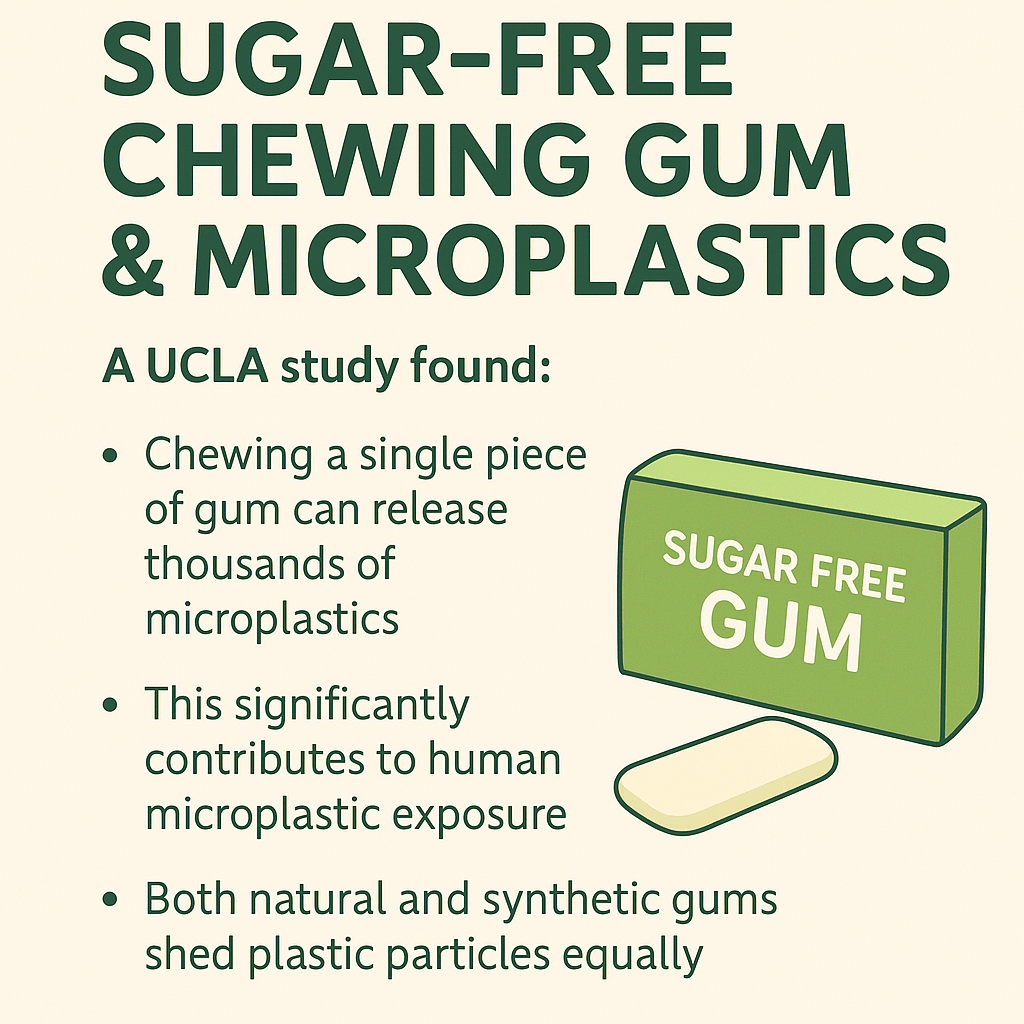
For years, sugar free chewing gum has been marketed as a healthier, tooth-friendly alternative to the sugary varieties. However, new research suggests there’s more to consider before you pop another piece. A recent UCLA study has revealed that chewing just one piece of gum can release thousands of microplastic particles into your mouth — and ultimately, into your body.
Sugar Free Chewing Gum – What Did the UCLA Study Discover?
In a groundbreaking study, researchers at the University of California, Los Angeles analysed how different types of chewing gum behave under the pressure of normal chewing. Surprisingly, they found that both natural and synthetic gums shed microplastic particles at similar rates.
According to the findings, a single piece of gum can release thousands of tiny plastic fragments. These microplastics are small enough to be swallowed unknowingly, adding to the growing concern over daily plastic exposure.
Sugar Free Chewing Gum – Why Microplastics Are a Concern
Microplastics — tiny plastic particles less than 5mm in size — have been linked to a wide range of health risks. Although research is ongoing, current studies suggest that these particles can cause inflammation, disrupt hormones, and affect organ function over time.
As they accumulate in the body, microplastics may interfere with cellular health and immune response. The fact that chewing gum — especially sugar free — could be a source of these particles is raising eyebrows in the scientific and public health communities.
Sugar Free Doesn’t Mean Risk-Free
It’s easy to assume that sugar free is a safer choice. After all, it’s promoted as being better for teeth and waistlines. However, the UCLA study challenges this perception by pointing to another hidden concern — plastic ingestion.
Many sugar free gums use synthetic rubber as a base, often listed vaguely on ingredient labels as “gum base.” This catch-all term can include plastic, resins, and emulsifiers. The chewing action, it seems, can cause the release of particles from these materials.
What This Means for Public Health
With microplastics already found in drinking water, seafood, and even air, the idea that chewing gum might be a direct and concentrated source is alarming. It suggests that something as simple as chewing gum — especially sugar free — might be contributing significantly to our total plastic load.
Health experts are now urging more transparency in labelling and stronger regulation over what constitutes a “gum base.” Furthermore, this study supports the growing call for alternative products that are biodegradable and safe to chew.
What You Can Do
If you’re concerned about microplastic exposure from gum, consider these alternatives:
- Switch to natural gums made from chicle or other biodegradable bases.
- Limit gum chewing, especially sugar free varieties that may contain synthetic ingredients.
- Read labels carefully and research brands that commit to plastic-free formulations.
- Support regulation and awareness campaigns that push for better food safety standards.
Final Thoughts
The UCLA study shines a light on an unexpected source of microplastic ingestion. While sugar free gum may be cavity-friendly, it’s not necessarily body-friendly. As awareness grows, so does the demand for transparency and safer alternatives.
Sugar free chewing gum is a small, everyday product that often goes unnoticed, yet discussions around microplastics naturally raise questions about what materials we regularly consume and discard. This topic fits well alongside Plastic-Free Alternatives for Everyday Living, where simple swaps and more mindful product choices are explored as part of a cleaner, more environmentally aware lifestyle.