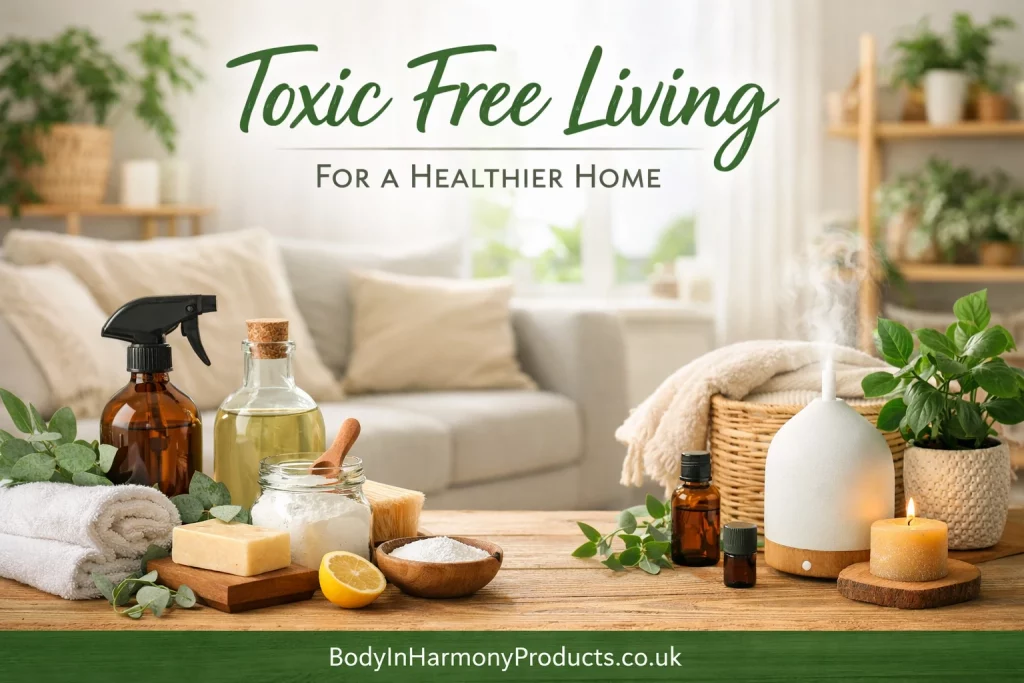
Toxic Free Living for a Healthier Home
Toxic free living focuses on reducing unnecessary chemical exposure within the home to create a safer, calmer environment. It is not about fear or extremes. Instead, it encourages awareness of what surrounds us daily and how small, informed choices can support wellbeing over time. Many household products contain substances that linger in the air, settle on surfaces, or come into contact with skin regularly.
Over time, this exposure can quietly affect comfort, indoor air quality, and overall balance. By choosing gentler alternatives and simplifying what comes into the home, households often notice a more settled and breathable living space.
This approach fits naturally under eco living, as it prioritises long-term health, clarity, and sustainability rather than quick fixes or convenience-driven habits. The goal is progress, not perfection, allowing changes to happen gradually and without pressure. As awareness grows, many people begin to feel more confident about questioning ingredients, labels, and claims, which leads to more intentional living overall.
Toxic-free living is part of our wider Eco Living approach, supporting healthier choices for the home while reducing exposure to unnecessary chemicals.
Toxic Free Living and Everyday Awareness
Everyday awareness is the foundation of toxic free living. The first step is recognising where unnecessary toxins commonly appear. Cleaning products, air fresheners, personal care items, and even some household furnishings are often overlooked sources. Many of these products are designed to prioritise fragrance, speed, or appearance rather than long-term safety.
Developing awareness helps households pause before purchasing and consider whether a product is truly needed or whether a simpler alternative would work just as well. Over time, this mindset reduces impulse buying and encourages better decision-making.
Homes often feel less cluttered as fewer unused or half-finished products build up. This awareness also supports confidence, as choices are based on understanding rather than marketing claims, making everyday routines feel calmer and more controlled.
Toxic Free Living for Long-Term Wellbeing
Reducing chemical exposure supports both physical comfort and mental clarity. Fewer synthetic scents and harsh ingredients can help create a calmer indoor atmosphere, particularly for those sensitive to strong smells or additives. A more considered home environment often feels lighter, easier to maintain, and more supportive of daily life.
Long-term, this approach encourages consistency. Products are chosen carefully, used fully, and replaced less often. This reduces waste while supporting a healthier relationship with consumption.
As habits settle, toxic free living becomes part of everyday life rather than a separate effort or ongoing project. Storage areas become simpler, cleaning routines feel less demanding, and the home gradually reflects a more balanced way of living that supports wellbeing without constant attention.
Making Safer Choices Without Overwhelm
Adopting a gentler approach does not require immediate or dramatic change. Replacing items gradually as they run out keeps the process manageable and avoids unnecessary waste. Reading labels, choosing simpler formulations, and prioritising multi-purpose products all help reduce exposure without complicating routines.
Focusing on one area of the home at a time can also make the process feel more achievable. Small, consistent steps build confidence and make long-term change easier to maintain. The key is choosing options that suit your household rather than aiming for perfection.
Many people interested in toxic-free living also choose eco-friendly cleaning products to keep household routines safer and more natural.
Integrating a Healthier Approach Into Daily Life
Consistency is what makes toxic free living sustainable. When safer choices become part of normal routines, they no longer feel like effort. Shopping habits become more intentional, storage becomes more organised, and daily tasks feel easier to manage.
Over time, this approach supports a sense of calm and control, helping households feel more connected to their space. As routines settle, decision-making becomes simpler because trusted products and habits are already in place, removing the need to constantly reassess choices. This reduces mental load and helps daily life flow more smoothly.
A healthier approach also encourages households to slow down and be more present with their environment. When fewer harsh products are used, the home often feels quieter and more comfortable, both physically and mentally. Cleaning, organising, and maintaining spaces become less overwhelming because systems are simpler and more consistent.
This can be especially helpful for busy households where time and energy are limited. Over time, these routines create a sense of confidence. People feel more in control of what enters their home and how it is used.
This sense of ownership supports long-term habits that feel natural rather than forced. Ultimately, toxic free living supports balance. It encourages thoughtful choices that protect wellbeing, reduce unnecessary exposure, and create a home environment that feels supportive, comfortable, and aligned with eco living values