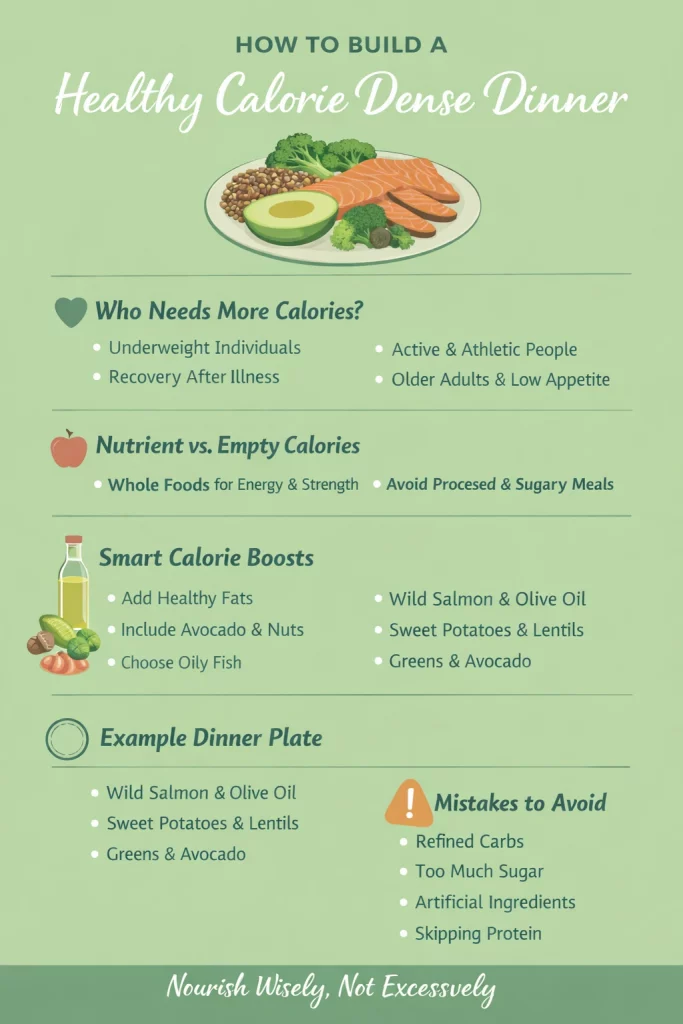
🌿 How to Create a Healthy Calorie Dense Dinner the Right Way
When people hear the phrase calorie dense dinner, they often think of oversized takeaway portions, creamy sauces and ultra-processed convenience food. However, calorie dense does not have to mean unhealthy.
In fact, a healthy calorie dense dinner can play an important role in recovery, rebuilding strength, supporting metabolism and maintaining balance — when it’s done properly.
The key is understanding the difference between calories and nourishment.
🥑 What Does “Calorie Dense” Actually Mean?
A calorie dense dinner simply means a meal that contains more energy per serving.
For example:
Foods high in healthy fats contain more calories per gram
Protein-rich foods provide sustained energy
Whole carbohydrates supply long-lasting fuel
However, the quality of those calories matters more than the number itself.
1,000 calories from fried processed food affects the body very differently to 1,000 calories from whole, nutrient-rich ingredients.
That’s where wellness thinking comes in.
🌱 Who Might Benefit From a Calorie Dense Dinner?
While weight loss dominates online nutrition talk, some people genuinely need more energy intake.
A carefully structured calorie dense dinner may support:
Underweight individuals
Those recovering from illness or surgery
Older adults with reduced appetite
Highly active individuals
People with naturally fast metabolisms
Those under prolonged stress
In these situations, focusing on a healthy calorie dense dinner built from whole foods can support strength without relying on processed fillers.
⚖️ Calorie Dense vs Nutrient Dense – Why the Difference Matters
Not all high-calorie meals are equal.
Empty calorie example:
Refined white pasta
Processed cheese
Seed oils
Sugary sauces
Nourishing calorie example:
Wild salmon or grass-fed beef
Extra virgin olive oil
Sweet potatoes
Lentils
Avocado
Seasonal vegetables
Both may be calorie dense dinners, but only one truly supports long-term wellbeing.
The goal at BIHP is not just higher calories — it is intelligent nourishment.
🍲 Example: A Healthy Calorie Dense Dinner (Whole-Food Style)
Here’s a balanced example that supports energy and recovery:
Baked wild salmon
Roasted sweet potatoes drizzled with olive oil
Steamed broccoli and courgette
A side of lentils cooked with garlic and herbs
Half an avocado
Why this works:
Healthy fats increase calorie density naturally
Protein supports muscle repair
Complex carbohydrates stabilise blood sugar
Fibre supports digestion
Micronutrients assist metabolic function
This is a calorie dense dinner that fuels rather than overloads.
🧠 Smart Ways to Increase Calories Without Ultra-Processed Foods
If someone needs more energy intake, small adjustments work well:
Add extra virgin olive oil after cooking
Include nuts or seeds in salads
Use full-fat natural yoghurt instead of low-fat versions
Add avocado to savoury meals
Incorporate oily fish twice weekly
These changes increase energy density while maintaining nutrient quality.
🚫 Common Mistakes to Avoid
When aiming for a calorie-rich whole-food meal, avoid:
Relying on refined carbohydrates
Increasing sugar intake
Using industrial seed oils
Overeating in one sitting
Ignoring digestion
Higher calorie intake should still feel balanced and sustainable.
🌿 Final Thoughts
A higher-calorie balanced dinner does not have to mean indulgence or excess. When approached thoughtfully, a wholesome energy-packed dinner can support recovery, energy and long-term resilience.
The difference lies in food quality, preparation and intention.
Wellness is not about extremes. It is about using food as structured support for the body’s natural processes.
And sometimes, that means nourishing more — not less.
If you’re focusing on building meals that genuinely support balance rather than just increasing intake, it helps to understand the wider principles behind whole-food nourishment. Our guide to Food for Wellbeing – Natural Choices for Everyday Balance explains how to structure meals around quality ingredients, seasonal produce and sustainable habits that support long-term health.