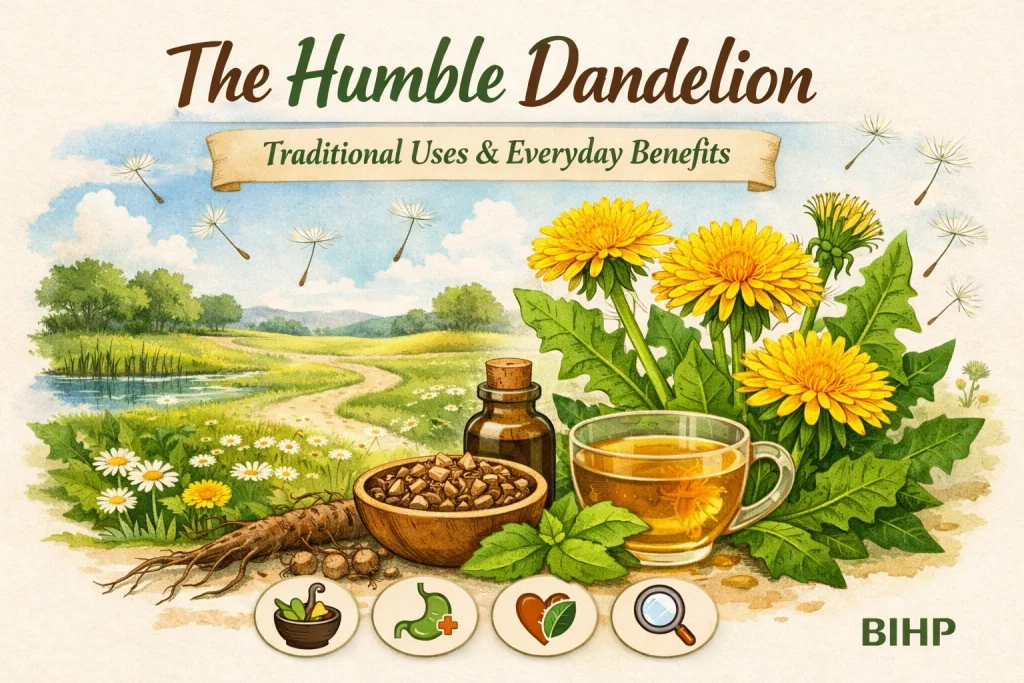
🌼The Humble Dandelion – A Forgotten Plant With Everyday Benefits
Often dismissed as a stubborn garden weed, the humble dandelion has a long and interesting history in traditional food and herbal use. Long before neat lawns and chemical weedkillers became common, people valued this bright yellow plant for its versatility and role in everyday nourishment.
As interest grows around whole foods and simple ingredients, the humble dandelion is gaining renewed attention. Not as a cure-all or trend-driven superfood, but as a familiar plant that has quietly supported balanced diets for generations.
This article looks at the dandelion in a grounded, practical way, exploring its background, traditional uses, and why it still has relevance in modern natural living.
🌿The humble Dandelion – What Is the Dandelion?
The dandelion, botanically known as Taraxacum officinale, grows widely across Europe, Asia, and North America. It thrives in poor soil, returns year after year, and requires no special care to survive.
Historically, people made use of almost every part of the plant, including the leaves, roots, and flowers. Rather than seeing it as a nuisance, earlier cultures recognised the value of this resilient plant as both food and drink.
The ability of the humble dandelion to grow freely and reliably is part of what made it such a dependable ingredient in traditional diets.
📜Traditional Uses of Dandelion
For centuries, dandelion featured in everyday meals and home preparations. Fresh leaves were added to salads, roots were dried and brewed, and flowers were often used in infusions and syrups.
Many traditional diets included bitter plants as a way to balance richer foods. Dandelion leaves, with their naturally bitter taste, played a role in encouraging mindful eating and digestive balance.
Instead of isolating individual compounds, traditional approaches focused on using the whole plant as part of a varied and seasonal way of eating.
🥬Nutritional Value of Dandelion
Dandelion leaves contain a range of naturally occurring nutrients when consumed fresh or lightly prepared. These include fibre, vitamins such as A and C, and minerals like potassium and iron.
The root has also been used in roasted or dried form, often brewed as a caffeine-free drink. While modern diets frequently rely on supplements, plants like the humble dandelion remind us that many nutrients still come from simple, unprocessed foods.
As with all plant foods, preparation and quality matter more than marketing claims.
🍵Dandelion and Digestive Balance
One of the most common traditional associations with dandelion relates to digestion. Bitter-tasting plants have long featured in meals to help balance heavier foods and encourage digestive awareness.
Modern diets often lack bitterness and fibre, favouring sweetness and refined ingredients instead. Including plants such as the humble dandelion can help reintroduce variety without dramatic dietary changes.
Many people enjoy dandelion tea as part of a daily routine, valued more for its simplicity than any immediate effect.
🌱Everyday Wellbeing and Natural Choices
The appeal of the humble dandelion lies in its modest nature. It does not rely on bold health claims or synthetic processing. Instead, it represents a slower, more thoughtful approach to food and wellbeing.
As awareness grows around ultra-processed foods and misleading “healthy” labels, plants like dandelion encourage people to read ingredient lists carefully and question convenience products.
This approach aligns with making informed choices rather than chasing trends.
🥗Dandelion in Modern Diets
Today, people include dandelion in several simple forms. These include fresh leaves in salads, dried leaves or roots for tea, and roasted root blends used as caffeine-free alternatives.
When choosing dandelion products, clean sourcing and minimal processing matter far more than packaging or branding. As always, moderation and variety remain key to a balanced diet.
🌾Final Thoughts on the Humble Dandelion
The humble dandelion offers a quiet reminder that value does not always come from polished packaging or fashionable ingredients. Often, the most familiar plants have the longest history of everyday use.
By learning more about traditional foods like dandelion, people can build a healthier relationship with what they eat and become more aware of how modern diets have shifted.
Sometimes, the most meaningful lessons grow right under our feet.
Traditional plants are often valued for their quiet support when included as part of everyday wellbeing practices. The humble dandelion has been used for generations as a natural way to support balance and nourishment, particularly when enjoyed seasonally or as part of gentle routines. This nature-led approach fits naturally within Physical Wellbeing | Supporting Balance in Everyday Life, where simple habits and natural choices are explored as part of maintaining long-term comfort and vitality.