🌿 Traditional Uses of Herbs and Spices
Herbs and spices have been part of everyday life for thousands of years. The traditional uses of herbs and spices extend far beyond simply adding flavour to food. Throughout history, people have treasured them for cooking, celebrations, trade, religious ceremonies and even as symbols of wealth and hospitality.
Although our kitchens look very different today, many of these traditions continue. Fresh herbs still grow in gardens, fragrant spices still fill our cupboards and family recipes continue to pass from one generation to the next. As a result, herbs and spices remain an important part of everyday wellbeing and home cooking.
Let’s take a closer look at how these remarkable plants earned their place in homes around the world.
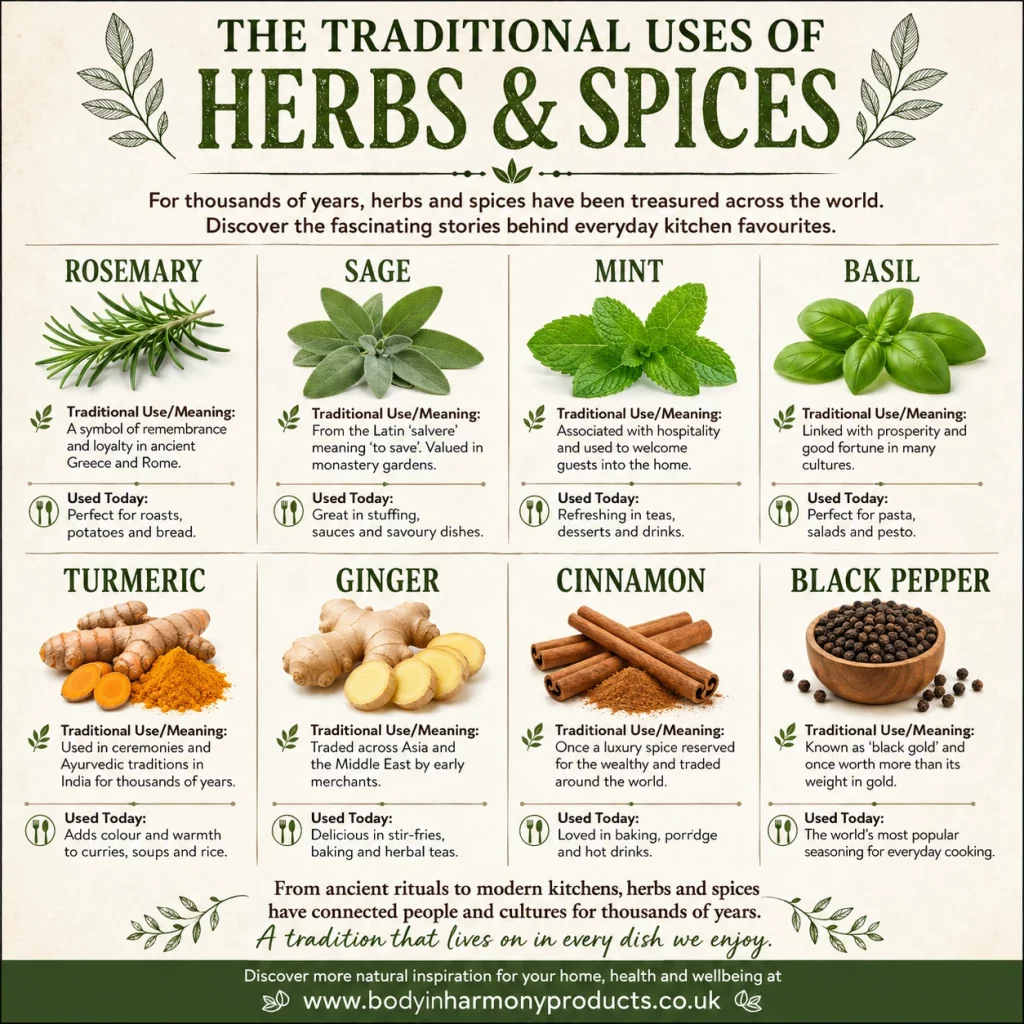
📊 Traditional Uses of Herbs and Spices at a Glance
| 🌿 Herb / Spice | 🌍 Traditional Association | 🍽️ Everyday Use Today |
|---|---|---|
| Rosemary | Remembrance and loyalty | Roasts and potatoes |
| Sage | Wisdom and household herb | Stuffing and sauces |
| Mint | Hospitality and freshness | Tea and desserts |
| Basil | Prosperity and protection | Pasta and salads |
| Turmeric | Ceremonies and Ayurveda | Curries and rice |
| Ginger | Trade and warming drinks | Stir-fries and baking |
| Cinnamon | Luxury and celebration | Baking and porridge |
| Black Pepper | Wealth and trade | Everyday seasoning |
🌍 How Different Cultures Valued Herbs and Spices
Long before supermarkets existed, herbs and spices were among the world’s most valuable natural resources. Consequently, merchants travelled across continents to trade rare spices, while families carefully grew useful herbs close to their homes.
🏺 Ancient Egypt
The Ancient Egyptians valued herbs and spices for their versatility. Garlic, coriander and cumin flavoured meals, while fragrant plants featured in perfumes, ceremonies and important rituals. Furthermore, herbs often symbolised respect and honour, making them an important part of daily life.
🪷 India
In India, herbs and spices became deeply connected with Ayurvedic traditions and family cooking. Turmeric, ginger and cardamom appeared not only in everyday meals but also during weddings, festivals and religious celebrations. Even today, many of these customs continue.
🏯 China
Traditional Chinese culture embraced herbs and spices that complemented the changing seasons. Ginger, cinnamon and star anise became popular ingredients because they added warmth, flavour and balance to many family recipes. Meanwhile, growing useful herbs at home became a tradition that passed through generations.
🏛️ Ancient Greece and Rome
The Greeks and Romans admired herbs for both their beauty and practicality. Rosemary symbolised remembrance, while mint represented hospitality and welcome. Consequently, herb gardens became a familiar feature of many homes.
🏰 Medieval Europe
As trade routes expanded, spices such as cinnamon, cloves and black pepper became highly prized. In fact, owning exotic spices often reflected wealth and social status. However, ordinary families continued to grow common herbs in cottage gardens, ensuring fresh ingredients were always close at hand.
🌿 More Than Ingredients
Although herbs and spices are now best known for cooking, their traditional uses were surprisingly varied.
People commonly used them for:
- 🍽️ Flavouring everyday meals.
- 🧂 Preserving food before refrigeration.
- 🌸 Creating perfumes and scented oils.
- 🙏 Religious ceremonies.
- 💍 Weddings and celebrations.
- 🚢 Trading with distant countries.
- 🏡 Growing in cottage and monastery gardens.
- 🤝 Welcoming family and guests.
- 👑 Displaying wealth and prosperity.
Therefore, herbs and spices became woven into everyday life rather than simply sitting on a kitchen shelf.
🌿 Traditional Uses of Herbs and Spices Through the Ages
Every herb and spice has its own unique story. While some became famous because of their wonderful flavour, others earned their reputation through tradition, folklore or cultural celebrations. Nevertheless, they all share one thing in common—they have stood the test of time.
From the fragrant rosemary growing beside a cottage door to the precious cinnamon carried across ancient trade routes, these remarkable plants have connected people, cultures and communities for centuries. Today, although lifestyles have changed, their stories continue every time we prepare a homemade meal or grow fresh herbs in the garden.
🌱 Popular Herbs and Their Traditional Uses
🌿 Rosemary
Rosemary has been admired for centuries because of its fragrant leaves and hardy nature. In Ancient Greece and Rome, it became a symbol of remembrance and loyalty, which is why it often appeared at weddings and important ceremonies. Today, rosemary is better known for adding flavour to roast dinners, potatoes and homemade bread. However, it still holds a special place in many gardens thanks to its beautiful scent and evergreen appearance.
🍃 Sage
The name sage comes from the Latin word salvere, meaning “to save” or “to heal.” As a result, it became one of the most respected herbs in medieval monastery gardens. Although sage is now best known for stuffing and savoury dishes, it has long been appreciated for its pleasant aroma and versatility. Furthermore, it is easy to grow, making it a popular choice in kitchen gardens.
🍀 Mint
Mint has refreshed homes and gardens for thousands of years. Many ancient cultures associated it with hospitality, often placing fresh mint around the home to welcome visitors. Today, it remains just as popular in herbal teas, desserts, salads and refreshing summer drinks. Because it grows so quickly, mint continues to be a favourite herb for beginner gardeners.
🌱 Basil
Basil has long been linked with prosperity and good fortune in several cultures. While it is now famous for Mediterranean cooking, it was once valued as much for its symbolism as its flavour. Fresh basil pairs perfectly with tomatoes, pasta and homemade pesto, while its sweet aroma makes it one of the most recognisable herbs in the kitchen.
🌶️ Popular Spices and Their Traditional Uses
🟡 Turmeric
Turmeric has been used in India for thousands of years and remains one of the world’s best-known spices. Its bright golden colour made it popular during celebrations and traditional ceremonies, while it also became an important ingredient in Ayurvedic cooking. Today, turmeric continues to add colour and warmth to curries, soups and rice dishes around the world.
🫚 Ginger
Ginger has travelled the globe for centuries. Early traders carried it across Asia, Europe and the Middle East because it stored well during long journeys. Although ginger is now widely used in stir-fries, biscuits and herbal teas, its rich history makes it one of the oldest spices still enjoyed in everyday cooking.
🟤 Cinnamon
Cinnamon was once considered a luxury that only wealthy families could afford. Consequently, it became one of the most valuable spices traded around the world. Today, thankfully, everyone can enjoy its sweet, warming flavour. Whether sprinkled over porridge, baked into cakes or stirred into hot drinks, cinnamon remains a household favourite.
⚫ Black Pepper
It’s hard to imagine a kitchen without black pepper, yet there was a time when it was worth more than its weight in gold. Merchants travelled thousands of miles to trade this precious spice, making it a symbol of wealth and prosperity. Nowadays, black pepper is one of the most commonly used seasonings and adds depth of flavour to countless savoury dishes.
🌿 A Tradition That Lives On
Although the world has changed dramatically over the centuries, many herbs and spices remain just as popular today. Some continue to feature in family celebrations, while others have become everyday ingredients that many of us use without a second thought. Nevertheless, every pinch of rosemary, cinnamon or turmeric carries a story that stretches back through history.
By learning about the traditional uses of herbs and spices, we gain a greater appreciation for the cultures and generations that helped shape the recipes we still enjoy today. Whether you’re growing fresh herbs in the garden or experimenting with new spices in the kitchen, you’re continuing a tradition that has connected people across the world for thousands of years.
🌿 Continue Your Journey
The traditional uses of herbs and spices are just one chapter in their remarkable story. While history reveals how these natural ingredients shaped cultures and traditions, there’s even more to discover about their place in modern living. If you’d like to explore their everyday benefits, read our guide to Herbs and Spices for Everyday Wellbeing, where you’ll find practical tips, popular herbs and simple ways to include them in your daily routine.