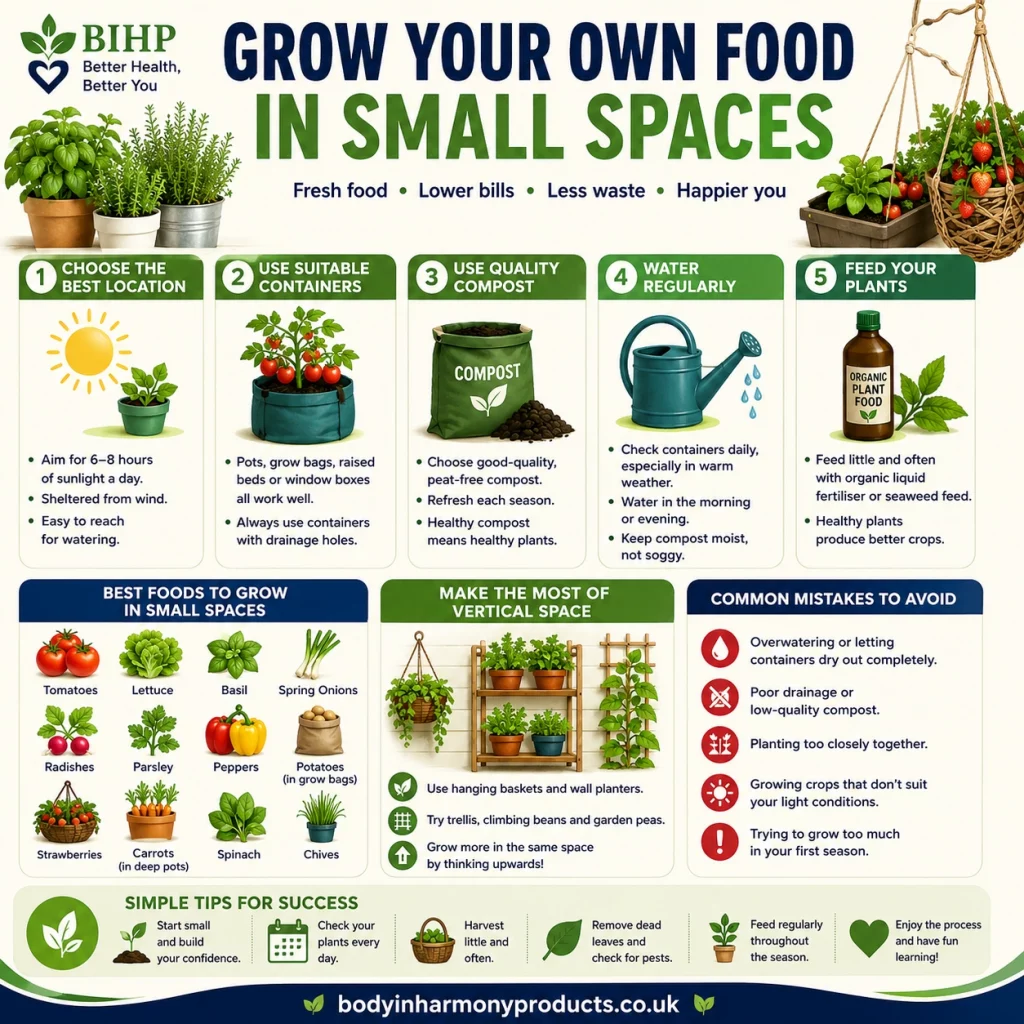
🌱 Grow Your Own Food in Small Spaces
🌿 Fresh Food Is Closer Than You Think. Learning to grow your own food in small spaces is easier than many people imagine. You do not need a large garden to enjoy fresh vegetables and herbs. Instead, a sunny patio, balcony, courtyard or even a windowsill can become a productive growing area. As a result, you can enjoy fresher food, reduce waste and lower your food bills while creating a greener lifestyle.
🌍 Why Grow Your Own Food in Small Spaces?
Growing your own produce offers far more than a basket of fresh vegetables. It also helps you reconnect with nature while reducing your environmental impact.
Some of the biggest benefits include:
- 🥕 Fresher vegetables picked when you need them.
- 💷 Lower food shopping costs over time.
- ♻️ Less plastic packaging.
- 🌎 Reduced food miles.
- 🌿 More time outdoors.
- 😊 A rewarding and relaxing hobby.
- 👨👩👧 A great way to teach children about food.
Even better, you decide how your crops are grown. Therefore, you stay in control of the compost, fertilisers and watering routine from start to finish.
🪴 How to Grow Your Own Food in Small Spaces
☀️ Choose the Best Location
Most vegetables enjoy six to eight hours of sunlight each day. Therefore, spend a little time finding the brightest area before placing your containers.
Choose somewhere that is:
- Sunny for most of the day.
- Sheltered from strong winds.
- Easy to reach for watering.
- Close to your kitchen if possible.
🪣 Use Suitable Containers
You do not need expensive equipment to get started. In fact, many vegetables grow happily in simple containers.
Good choices include:
- Plant pots.
- Grow bags.
- Raised beds.
- Window boxes.
- Hanging baskets.
- Recycled containers with drainage holes.
🌱 Use Quality Compost
Healthy compost creates healthy plants. Therefore, invest in a good-quality peat-free compost and refresh it each growing season. Rich compost retains moisture while supplying nutrients that encourage stronger growth.
💧 Water Regularly
Containers dry out more quickly than garden soil. Consequently, check them every day during warm weather. Water early in the morning or later in the evening to reduce evaporation.
🌾 Feed Your Plants
As your vegetables grow, they need extra nutrients. Feed them regularly with an organic liquid fertiliser or seaweed feed. Little and often usually produces the best results.
🥕 The Best Foods to Grow in Small Spaces
If you want to grow your own food in small spaces, begin with reliable crops that suit containers.
Popular choices include:
- 🍅 Tomatoes
- 🥬 Lettuce
- 🌿 Basil
- 🌿 Parsley
- 🧅 Spring onions
- 🥕 Radishes
- 🫑 Peppers
- 🥔 Potatoes in grow bags
- 🍓 Strawberries
- 🥕 Carrots in deep pots
These crops are simple to manage and reward you with regular harvests throughout the season.
🧱 Make the Most of Vertical Space
When space is limited, think upwards instead of outwards. Vertical gardening allows you to grow your own food in small spaces without taking up valuable floor space.
Try using:
- Hanging baskets.
- Wall planters.
- Trellis panels.
- Climbing beans.
- Garden peas.
- Tiered shelving.
As a result, you can grow more food in the same area while keeping everything tidy.
♻️ Reduce Waste While Growing
Simple eco-friendly habits help both your garden and the environment.
Consider these ideas:
- Collect rainwater.
- Compost suitable kitchen waste.
- Reuse old pots.
- Repurpose containers.
- Save seeds where possible.
- Mulch to retain moisture.
Small changes soon make a noticeable difference.
⚠️ Common Mistakes to Avoid
Avoid these beginner mistakes:
- Overwatering.
- Poor drainage.
- Low-quality compost.
- Planting too closely.
- Choosing unsuitable crops for shady areas.
- Growing too much during your first season.
Instead, start small and build your confidence with each harvest.
✅ Simple Tips for Success
- Start with two or three easy vegetables.
- Check your plants every day.
- Harvest regularly.
- Remove dead leaves.
- Feed little and often.
- Keep containers clean.
- Enjoy learning as your garden develops.
🌼 Conclusion
Choosing to grow your own food in small spaces proves that you do not need a large garden to enjoy fresh produce. With a few containers, quality compost and regular care, almost anyone can grow healthy food at home. Start with simple crops, enjoy the process and expand your garden as your confidence grows. Before long, you will discover that even the smallest space can produce an impressive harvest.
Growing your own herbs is one of the easiest ways to begin gardening, even if you only have a small outdoor space. Fresh herbs add flavour to everyday meals, attract beneficial pollinators and have been valued for generations. If you would like to learn more about their history and how different cultures have used them over the centuries, take a look at our guide to Traditional Uses of Herbs and Spices. It explores the fascinating stories behind many popular herbs and explains why they continue to play an important role in kitchens around the world.